
Not getting the results you want from your strategy?
Whether you are starting your annual budgeting process, or just seeing how the day-to-day operations are performing, surely you are doing so with your latest strategy in mind – which has already led to substantial revenue and profit improvements to the business. No? Well then, read on.
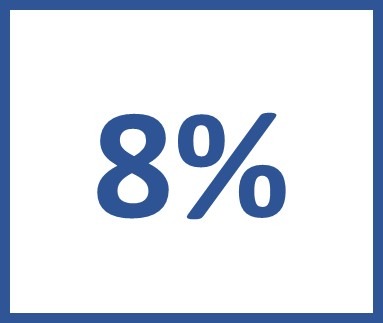
You are not alone if your strategy is not producing the results you were expecting. An HBR study showed that only 8% of leaders believe that their company is good at both strategy development and strategy execution. Only 13% think that their strategy is very effective. With all the effort that is dedicated to strategy development, that’s a pretty terrible track record.
What’s worse is that so few companies actually assess why their expected performance is lagging. Is it the strategy itself? Is it the execution of the strategy? What needs to change to get on track?
Strategy Development in Plain Language
There have been reams of books, articles, and opinions on what strategy is, and it is not surprising that there is a lot a “bad strategy” development out there. Much of it tends to obfuscate rather than clarify. In some cases, the strategy is no strategy at all.

Without getting into a debate on the right framework, components of the strategy, etc., it is worth focusing on a couple of simple clarifications:
- Strategy, at its core, is a set of decisions. It’s not a process, it’s not a plan, it’s a set of decisions.
- Two big decisions coming out of any strategy development effort*:
- Where are you going to play? (what industries, markets, product/services, etc.)
- How are you going to win? (i.e. meet the goals of the strategy)
These questions are deceptively simple, and naturally prompt other questions, e.g. what markets look attractive? What kind of company are we? What do customers want? What capabilities/ combination of capabilities makes us “special” from competitors? Are those capabilities difficult to replicate? Etc.
So why do we develop strategies in the first place? Companies want grow and be profitable. But resources are always limited. If the company focuses their limited resources on areas where it will be more successful, its growth, profit and value will increase. By doing so, the company is deciding not to focus resources in other areas. The clearer the strategy, the easier it will be to have the organization “row in the same direction.”
It’s that simple. Yet too many firms forget these basics.
Strategy Execution: making it real
One can have the perfect strategy, but if nothing changes at the company, that great thinking will go to waste. Similarly, your organization may be full of people who can execute, but if the strategy is not right, their efforts will not result in significant benefits. Having both is key – and rare.

There are a number of reasons for the strategy execution can fail: organizational disagreements on the direction, misalignment of incentives, failure to organize the strategy execution properly, and failing to properly resource the strategy execution effort are just a few reasons.
Budgeting and “initiative management” are two particular areas where strategy execution can get tripped up. Budgeting, as it is often done at companies, is a means to control costs. They are built from the ground up and often are based on last year’s expense. They may be very different than the new strategy projections.
Good strategies involve changes to the current state. Getting there requires taking risks (sometimes big risks). Some companies prefer a conservatively-built budget, so the expectations (and accountability) of the strategy sometimes never get built into the operating plan.
At the same time, any strategy execution effort will require resources to accomplish. But those resources sometimes are focused on different initiatives coming from leaders in each function. Adding new “strategy” initiatives to that list? You can imagine how easy the strategy execution efforts can get buried and under-resourced, even though those strategy initiatives may be the key to the company’s growth, margins and value.
Author’s note: I literally have seen a company curtail its strategy execution initiative because the “base business” was not meeting budget expectations – even though the strategy execution initiative was in place because the base business was not expected to perform well in the future. Think about the logic of that.
What do I do?
If you are not getting the results you want from your strategy but are not sure why, you can:
- roll the dice, make changes, and hope you guessed right, OR
- you can diagnose the problem and develop targeted actions so that you can accelerate the strategy and achieve your goals.

At Clear Performance, we have both the deep experience and the tools & capabilities to quickly assess where the disconnects are, and what should be done to get your company back on track.
Last point: somewhere in your industry, someone is developing and executing a strategy that will beat all the other players in the market. If strategy/ strategy execution is just a nice exercise to you, best of luck. But ask yourself the question that strategist Roger Martin poses: Do you want to win, or just say you want to win?
Let us know. We can help.
* Not my own idea: credit to many other strategy firms and experts, including Bain, Roger Martin and others. And yes, there are other components that are a part of a good strategy that I have not articulated here, including what is needed to achieve the strategy.
 Clear Performance Advisors, LLC
Leave a comment